Once upon a time, the word “celebrity” was followed by a strict list of credentials: Oscar winners, Emmy darlings, Olympic medalists, or bona fide royalty. Nicole Kidman, Halle Berry, Serena Williams, Princess Diana—these names formed a distant constellation, their brilliance built upon achievement, and that achievement, in turn, built upon a recognized talent.
Today, some new faces have infiltrated this galaxy. They possess no trophies, follow no scripts; all they have is a life recorded by cameras, twenty-four hours a day. And surprisingly, that seems to be enough.
I. The Line That Was Once Uncrossable
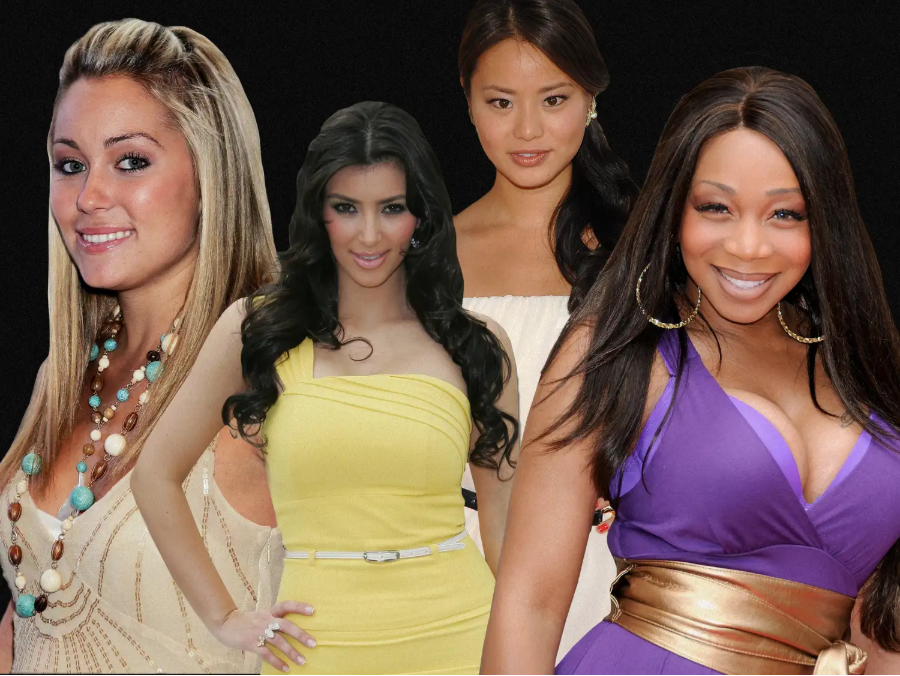
Reality TV stars are nothing new. Tiffany Pollard, Lauren Conrad, Nicole “Snooki” Polizzi—these names were already around in the 2000s. Yet back then, they hovered perpetually outside the threshold of “celebrity”—like guests allowed into the party, but forbidden from approaching the head table.
Kim Kardashian’s early years serve as the perfect illustration. She was told she would never grace the covers of certain magazines, never receive invitations to fashion shows. It was a clear boundary of legitimacy—an invisible glass wall separating reality TV stars from real stars. Few managed to shatter it; Kim K and Cardi B remain the most prominent exceptions.
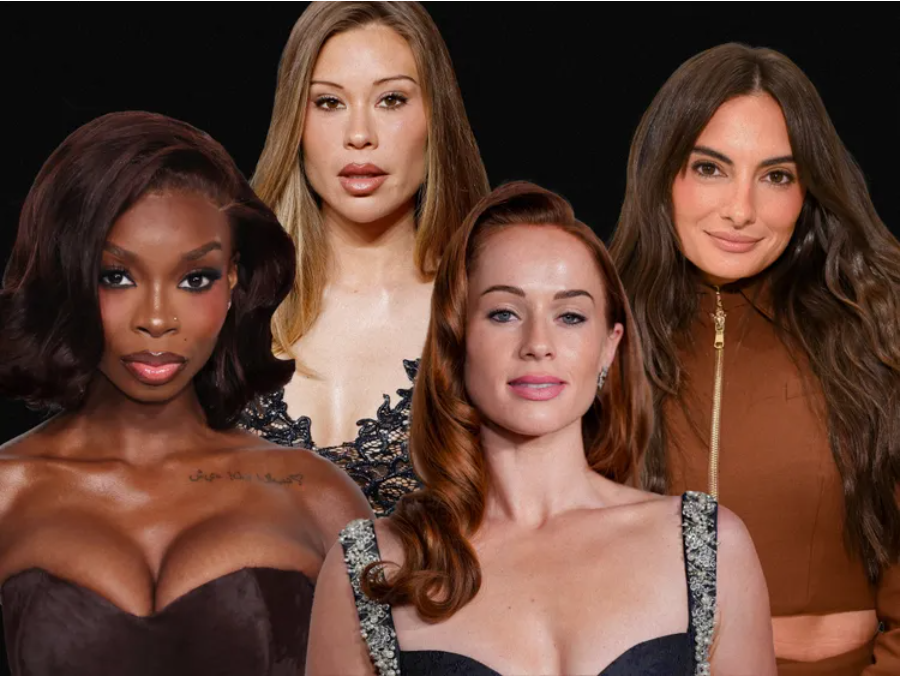
But now, that wall is crumbling. Paige DeSorbo, Alix Earle, Olandria Carthen—the time it takes for them to transition from reality TV to industry recognition is shrinking rapidly; they no longer require a lengthy process of “proving themselves.” Serena Page, Leah Kateb, JaNa Craig—these faces from Love Island are undergoing this same transformation at an equal pace.
This is not a story about any single individual, but rather a story about the era we inhabit. In a world where cultural boundaries are becoming increasingly blurred, the evolution of fame is simply a natural progression.
II. Television: The Oldest Pathway
Television has always served as a conduit to fame—regardless of whether the content is a sitcom or a dating competition. Appearing reliably in people’s living rooms week after week provides a level of exposure that transcends the specific genre of the show. We sometimes forget that many of today’s biggest stars actually got their start in the very same—and often “undignified”—ways.
“A clear turning point occurred with Kim Kardashian and the entire Kardashian/Jenner clan,” says Travis Cronin, a brand partnership strategist and former Entertainment Director at Us Weekly. “But many actors and singers who are highly respected today actually began on reality TV. Take Laverne Cox, for instance; she appeared on a TLC show called TRANSform Me, where three transgender women gave makeovers to others.”
He also points to Jamie Chung, who emerged from The Real World: San Diego, and Cardi B, who rose to fame via Love & Hip Hop. “Today, we wouldn’t even dare call Jamie Chung a reality TV star,” Cronin notes. “She’s an actress. A fashion icon. Television has always served as that pipeline—it’s just that, in the past, only a select few managed to parlay it into superstardom.”
Farai Bennett, a pop culture content creator, argues that, fundamentally, not much has changed. “I grew up during the era of The Hills,” he says. “Alix Earle is essentially the modern-day Lauren Conrad. She shows up at fashion events and does exactly what she’s supposed to do. We were captivated by her world because the show revolved around her—we wanted to be her.”
Conrad was also one of the first reality stars to launch brand partnerships, publish books, and create fashion lines—including her long-standing collaboration with Kohl’s. The real difference, Bennett explains, lies not in the level of exposure, but in the intent. “Lauren was hell-bent on making her fashion career a success because she knew that television wouldn’t last forever,” he says. “Today’s reality stars, however, understand that the television platform itself is the opportunity.”
III. That Defining Moment
The reality TV stars who truly manage to break through the noise often share one thing in common: a defining moment. A scandal. A dramatic outburst. Kim Kardashian’s leaked sex tape. Ariana Madix discovering Tom Sandoval’s infidelity. The slow-burn romance between Olandria Carthen and Nic. Americans love feeling as though they are active participants in a drama unfolding in real time. “Americans admire hard work; they admire those willing to put themselves out there, and those unafraid of endless criticism,” says Cronin. “The Kardashian family is the prime example. No matter how many times they get knocked down, they always show up. They crave fame—that’s obvious—but that very candor and honesty make them seem authentic, and therefore, likable.”
Cronin notes that this visible ambition has a long history. He points to Lady Gaga’s early appearance on the MTV show Boiling Points. “She just wanted to be famous. She wanted to be on camera,” he says. “Americans respect that desperate pursuit of fame—and that, in a way, explains where we find ourselves today.”
Turning to Olandria, Cronin believes the reaction was so swift because a “Jennifer Aniston effect” took hold. Public sympathy quickly crystallized around her. “As we watched her relationship with Taylor unfold, people felt sorry for her,” he says. “Americans love stories like that—especially when they center on someone who doesn’t deserve such hardship, yet is absolutely beautiful.”
He adds that Olandria stood out in a way audiences rarely see. “Rarely do we see dark-skinned women on television being spotlighted for such legitimate reasons,” Cronin observes. “Many people saw themselves in her. She was genuine; she stayed true to herself.”
IV. Fame Becomes Approachable
For a long time, fame was built on mystique. Stars were unattainable—a quality that was fascinating in itself; they seemed to exist on another planet. Shows like MTV Cribs and The Fabulous Life of… offered only fleeting glimpses, never the full picture. Celebrities were aspirational precisely because they were distant.
Over time, that equation flipped. Today, popularity depends more on “approachability” than on mystique. On TikTok, an influencer might amass a massive following by simply performing everyday chores; yet, the moment her life begins to appear too polished or curated, the comments section turns against her. “I can’t relate to her anymore” has become a distinct form of criticism in its own right. Fame is now fragile—deeply intertwined with how “accessible” a person feels. This sentiment is particularly strong among young audiences. “Traditional celebrities can sometimes feel a bit boring to Gen Z,” says Bennett. “They’re accustomed to everyone sharing everything, so that sense of mystique is hard to come by.” That is precisely why Emma Chamberlain resonates so deeply. “There are no major scandals or dramatic events,” Bennett explains. “It’s that rawness. That carefreeness. She feels like a friend.”
The same logic explains why Morgan Stewart McGraw strikes such a chord. “She’s filthy rich, yet still incredibly relatable,” Bennett observes. “She is the embodiment of the ‘cool girl’—and that vibe translates.”
It is also why reality TV stars continue to thrive. “The girls from Love Island, the Housewives—they give us exactly what we want,” says Bennett. “They have nothing to lose.” He cites Nene Leakes as an early example: “Divorce, then reconciliation—it all unfolded right there on camera. That kind of openness is exactly what people respond to.”
Olandria serves as a perfect exemplar of this openness. When she finally voiced her frustration over Taylor’s lack of reciprocity—declaring, “He didn’t do s–t for me,” in a thick Alabama drawl—viewers watched a woman shed the armor of the “strong Black woman” trope to speak her truth. It wasn’t a calculated strategy; it was pure humanity. And for many Black women watching, it resonated with particular intensity. That authenticity didn’t hinder her success after leaving the villa—it fueled it.
This same pattern recurs throughout today’s reality TV landscape. On The Secret Lives of Mormon Wives, Taylor Frankie Paul’s highly public meltdown—complete with an arrest and chaotic relationship drama—didn’t stall her relevance; it amplified it. Meanwhile, former Summer House star Paige DeSorbo has built a career that feels less like that of a traditional reality TV personality and more like that of a modern “It girl”: a former fashion writer, podcaster, entrepreneur, and founder of the upcoming “ready-to-lounge” brand, Daphne.

V. TikTok: Keeping the Story Alive
Social media represents the single biggest differentiator between today’s reality TV stars and those of the past. Cronin notes that TikTok has given reality TV stars “another avenue to appear before us—for isn’t the very essence of fame simply being seen?” Reality stars understand this, too. That is why you sometimes hear Love Island contestants say things like, “Your DMs are going to blow up,” or that their follower counts will go “crazy”—because once they leave the island, they have an immediate landing spot, a place where they can connect with fans ASAP.
This kind of immediacy didn’t exist in the early 2000s, which is why some names inevitably faded away. “For celebrities, you have to be seen repeatedly—it’s just like marketing,” Cronin says. “You have to see something three times before you’ll buy it.”
Social media has changed that rhythm. “Reality stars—and celebrities in general—have been empowered with the autonomy to curate their own public personas. The power is now in their hands.” Bennett agrees, pointing to Kim Kardashian’s recent TikTok vlogs. “Everyone is saying, ‘This is even better than the show,'” he notes. “That’s because there’s something so unfiltered and fun about it. That is the essence of TikTok—it works, and it only serves to amplify their influence.”
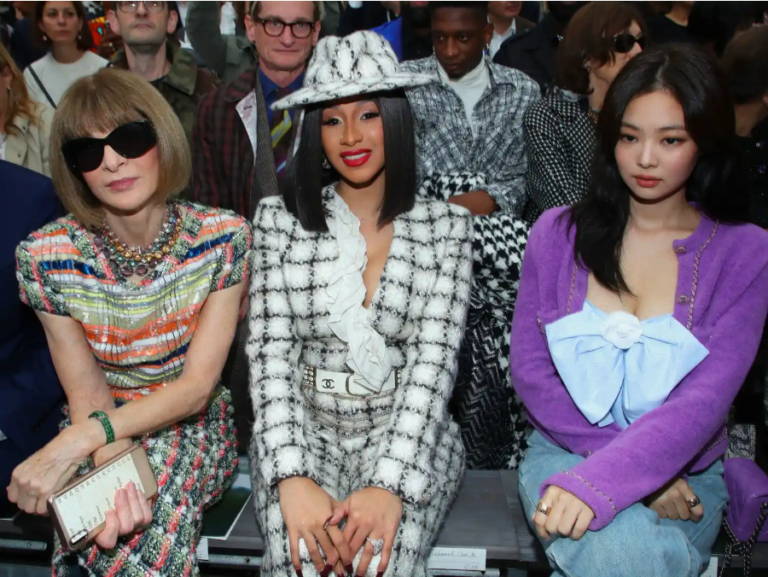
Cronin adds that brands, too, have ultimately had to follow suit. “Having spent so much time at Us Weekly and attended so many Fashion Week events, it’s clear that the fashion industry was slower to adapt,” he says. “Reality stars didn’t used to sit in the front row at shows hosted by heritage brands—but that had to change.”
Today, those barriers look different. “You see Cardi B sitting right next to Anna Wintour all the time now,” Cronin observes. “Beauty brands were quicker to react, but social media helped bridge the gap—and those partnerships have further legitimized reality TV stars.”
VI. The Road Ahead
While not every reality TV star will become a household name, once the cameras stop rolling, there are several clear strategies for maximizing visibility. “Start marketing yourself immediately,” says Cronin. “If you’re a singer on Love Island, you should be singing constantly. If you aspire to be a model, make sure you’re wearing the skimpiest bikinis and are always in heels—present the image you want people to remember you by, because that’s what sticks. We remember Olandria’s romance with Nic, but we’ll never forget her ethereal presence—so it makes perfect sense that she landed modeling gigs.”
Farai puts it even more simply: have a goal, then say it out loud. “Make sure you have a career in mind—something you genuinely want to do,” he says. “If I wanted to be the next Ryan Seacrest and I was on TV, I’d say so constantly. In the world of reality TV, words are powerful.”
In today’s media landscape, that power extends far beyond the screen—manifesting in massive social media reach, brand deals, and crossover opportunities spanning fashion, beauty, music, and hosting. And with new seasons of shows like Love Is Blind, Love Island, and Star Search launching this year, we’re certain that a fresh crop of breakout icons is already on the way.